


Facing a Furnace Breakdown During Albion’s Early Fall Chills?
Are you wondering why our Frontier Heating & A/C Service, Inc. technicians carry specific ignition control modules for older Albion furnaces when they arrive at your home? In our years of servicing local heating systems, a pattern we see often is older furnaces struggling to ignite just as the early fall cold snaps arrive. You turn on the thermostat expecting warm air, but instead, you hear a repetitive clicking sound followed by silence. This is a concrete problem our team frequently resolves when aging heating systems in historic homes experience sudden electronic module failures. The decision point quickly becomes clear: do you wait days for a generic part to be shipped, or do you hire a company that proactively stocks the right components for immediate relief? Professional heating service must be tailored to the specific age and model of your home’s equipment, especially during the early fall / September pre-heating season when sudden temperature drops create an urgent need for reliable heat.
For comprehensive help with your system, explore our furnace repair and service solutions.
The Critical Role of Ignition Control Modules in Older Furnaces
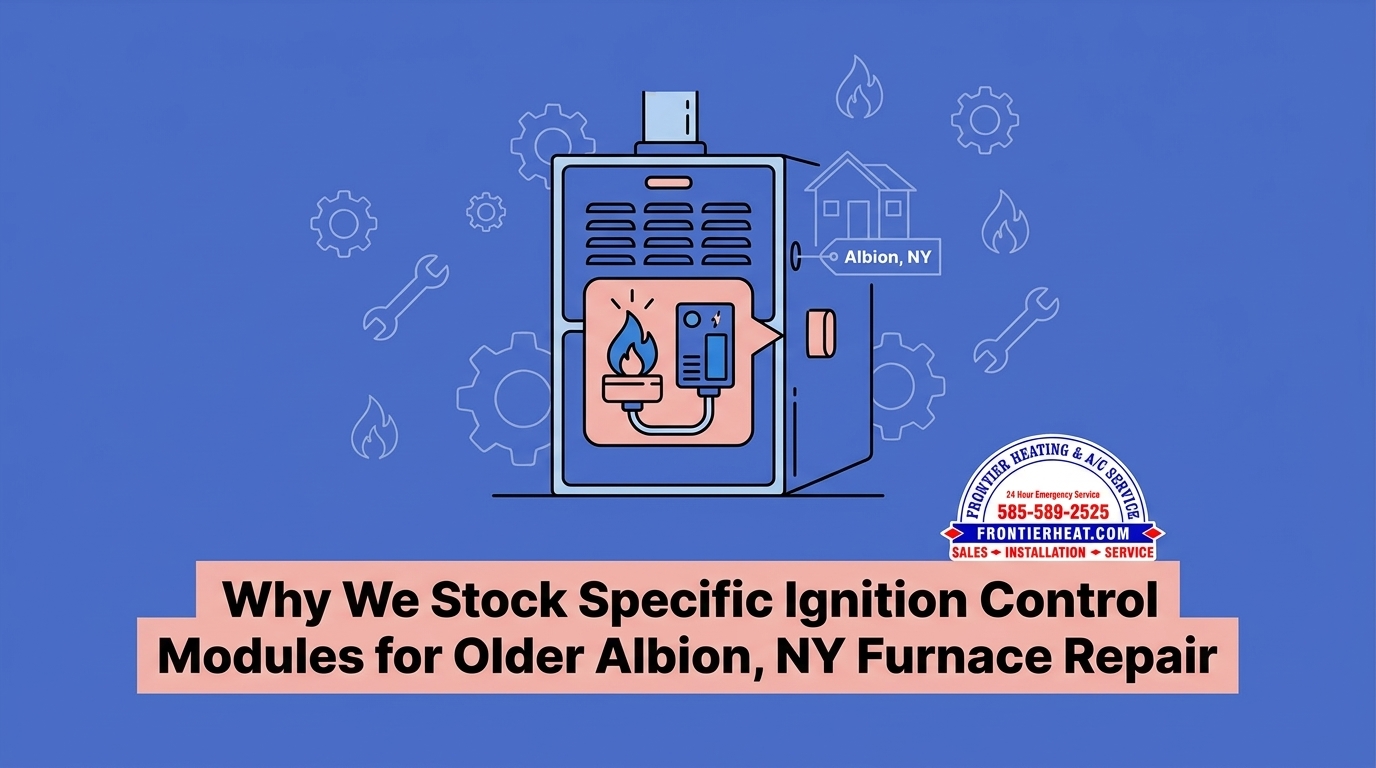
To understand why your heating system is failing, we always tell our customers they first need to understand the role of older furnace ignition control modules. This component acts as the central brain of your heating system. When your thermostat calls for heat, the ignition control module steps in to coordinate the gas valve, the igniter, and the flame sensor in a highly specific sequence. If any part of this sequence fails or is timed incorrectly, the module shuts the system down to prevent raw gas from flooding your home.
How Thermal Cycling Causes Wear and Tear
Over decades of use, we’ve seen firsthand how these electronic modules endure thousands of thermal cycles—heating up rapidly when the furnace runs and cooling down when it shuts off. This constant expansion and contraction eventually leads to electronic fatigue. Solder joints crack, microchips fail, and internal relays stick. When this fatigue reaches a breaking point, the module can no longer send the correct voltage to the igniter or open the gas valve.
The warning signs: You will often hear the system click repeatedly as it tries to initiate the heating cycle, but it will stubbornly refuse to light. You might also notice the blower fan turning on and off erratically without actually producing any warm air.
Why This Requires Professional Intervention
Because this component directly manages combustible gas and high-voltage electricity, diagnosing and replacing it requires expert furnace repair. As licensed professionals, we strictly advise that this is never a DIY project. Bypassing safety switches or installing an incorrect module can lead to catastrophic gas leaks, electrical fires, or severe carbon monoxide exposure. Our technicians have the specialized diagnostic tools to confirm whether the module itself has failed or if a peripheral safety switch is simply doing its job by keeping the system locked out.
Why Albion’s Historic Homes Require Specific HVAC Components
The architectural charm of Western New York comes with unique maintenance requirements. In our extensive experience working in Albion’s historic housing districts, our team regularly encounters older residential infrastructure, thicker plaster walls, and unique ductwork layouts. Because these homes have stood for generations, we’ve found that many of them rely on older, established furnace models that have been dutifully heating these spaces for a long time.
The Challenge of Aging Equipment
When our team deals with these aging systems, we know that parts are rarely universal. A furnace built twenty or thirty years ago utilizes specific wiring harnesses, distinct voltage requirements, and proprietary communication protocols between the thermostat and the ignition control module. You cannot simply pull a generic part off a hardware store shelf and expect it to communicate properly with a historic home’s heating system.
When you are facing common furnace repair issues, the specificity of the replacement parts matters immensely. Retrofitting generic or “universal” modules into these older units often leads to immediate safety lockouts, inefficient operation, or premature failure of other downstream components. The control board must precisely match the manufacturer’s original specifications to maintain the delicate balance of gas pressure and ignition timing.
Specialized Knowledge for Historic Properties
The age of the local housing stock directly dictates the specialized knowledge our technicians bring to the table. We make sure our team understands the legacy wiring diagrams and operational quirks of older furnaces. Without this localized expertise, a simple repair can quickly spiral into a prolonged, frustrating ordeal for the homeowner.
The Hidden Danger of ‘Diagnose Then Order’ Supply Chains
When your heat goes out, the most frustrating part of the process often isn’t the breakdown itself—it is the waiting. The standard industry approach to HVAC service relies heavily on a “diagnose then order” supply chain model. A technician arrives at your home, spends an hour diagnosing the issue, informs you that your ignition module is dead, and then leaves to order the part. We’ve seen homeowners left waiting for days while the component ships from a distant warehouse.
The Reality of Older Parts Availability
The current supply chain realities for older furnace ignition control modules are notoriously slow. General HVAC suppliers and big-box distributors rarely keep these specific legacy parts on their local shelves. Because the demand is highly localized to areas with older homes, national distributors store these modules in central hubs, requiring cross-country shipping before they ever reach your local technician.
The Discomfort of the Wait
This delay causes immense frustration and physical discomfort. Waiting three to five days for a shipping confirmation while your house steadily loses heat is unacceptable, especially as the weather turns cold. Your family is forced to rely on inefficient space heaters, extra blankets, and constant worry about the indoor temperature.
Contrasting the Timelines
To understand the stark difference between the industry standard and our proactive approach at Frontier Heating, consider how the repair timeline plays out:
| Repair Phase | Standard “Diagnose Then Order” Approach | Proactive Single-Visit Solution |
|---|---|---|
| Initial Visit | Technician identifies the broken module and leaves the home. | Technician identifies the broken module and retrieves the exact part from the van. |
| The Waiting Period | Homeowner waits 2-5 days in a cold house for shipping. | Zero wait time. The repair continues immediately. |
| Resolution | Technician returns days later for a second appointment to install. | Heat is completely restored during the very first appointment. |
This contrast highlights why immediate, single-visit restoration is an absolute necessity for homeowners relying on older heating equipment.

Our Proactive Van Stocking Strategy for Single-Visit Solutions
To eliminate the frustrating delays associated with supply chain bottlenecks, our team takes a completely different approach to inventory management. Instead of reacting to breakdowns as they happen, we utilize a proactive van stocking strategy that anticipates the exact needs of our local community. We study the historical data of common furnace failures in Albion to predict exactly which components will fail before they actually do.
How Our Inventory Process Works
Our logistical preparation is specifically designed around the unique needs of the properties in the Albion historic housing districts. Here is how our proactive stocking translates to faster service:
- Data-Driven Inventory: We track the specific makes and models of older furnaces operating in our service area, noting which ignition modules are most prone to thermal fatigue.
- Targeted Procurement: Before the heating season even begins, we source these specific legacy modules directly from manufacturers, bypassing the slow, reactive ordering process.
- Fleet Outfitting: Frontier Heating vans are uniquely stocked with specialized parts tailored to Albion’s historic housing stock, ensuring fast, same-day fixes.
- Immediate Installation: When our technician diagnoses a failed module, they simply walk out to their mobile warehouse, retrieve the exact OEM match, and restore your heat on the spot.
This level of preparation directly translates to single-visit repairs. By bypassing the traditional supply chain delays, we ensure that a failure in an older heating system does not equate to a multi-day disruption of your life.
Preventing Cold Exposure When September Temperatures Drop
The urgency of a single-visit repair becomes glaringly obvious to our crew when you look at the local climate data. During the early fall / September pre-heating season, the weather in Western New York can be highly unpredictable. While the afternoons might still feel mild, September low temperatures in the area frequently drop into the 40s and 50s overnight. This sudden shift creates an immediate, pressing need for a functional heating system.
The Vulnerability of Older Homes
Prolonged cold exposure is a serious risk, particularly in older, draftier historic homes. These properties often lack the modern insulation standards found in new builds, meaning they lose ambient heat very rapidly once the sun goes down. If your furnace is down for days waiting on a shipped part, the indoor temperature will plummet, making the home profoundly uncomfortable and potentially putting vulnerable family members at risk of cold stress.
The Value of Proactive Response
We believe there is immense peace of mind that comes from knowing a pre-heating season breakdown can be resolved immediately. You do not have to dread the first cold snap of the year. We strongly encourage proactive maintenance and a rapid response to early warning signs. If you hear your furnace clicking without ignition, or if the blower runs but the air remains cold, do not wait for the temperature to drop further. Addressing these symptoms early, backed by a fully stocked service van, ensures your historic home remains a warm, safe sanctuary no matter what the September weather brings.
Frequently Asked Questions About Ignition Module Failures
Why do older furnaces suddenly stop igniting?
Older furnaces stop igniting primarily due to thermal fatigue and electronic component degradation over decades of use. The ignition control module acts as the brain of the system, enduring extreme temperature fluctuations every time the furnace cycles on and off. Over time, this constant expansion and contraction causes micro-cracks in the solder joints and weakens internal relays. Eventually, the module can no longer send the necessary electrical signals to open the gas valve or spark the igniter, resulting in a sudden failure to produce heat.
How long does it typically take to fix a furnace ignition control module?
The repair timeline depends entirely on whether your HVAC company proactively stocks the required part. With the standard industry approach, you may wait three to five days for the specific older furnace ignition control modules to be ordered and shipped. However, when a Frontier Heating technician arrives in a van proactively stocked with components tailored to local historic homes, the diagnosis and replacement can be completed in a single, same-day visit, restoring your heat immediately.
Why do HVAC companies usually have to order parts for historic homes?
Most companies rely on a “diagnose then order” model because specific legacy modules are rare and expensive to keep in general inventory. General HVAC suppliers rarely stock parts for furnaces that are twenty or thirty years old, preferring to keep universal parts for modern systems on hand. If a service company is not explicitly dedicated to the specific architectural and mechanical makeup of a localized historic area, they cannot justify the upfront cost of stocking these highly specific, non-universal parts.
Can an ignition control module be repaired instead of replaced?
No, an ignition control module must always be replaced entirely by a licensed professional, never repaired. These modules are sealed electronic safety devices designed to prevent catastrophic events like gas leaks or electrical fires. Attempting to solder a broken board or bypass a failed relay compromises the built-in safety lockouts of the furnace. For the safety of your home and family, a failed module requires a brand-new, exact-match replacement component.
What are the early warning signs of a failing ignition module?
The most common early warning sign is a repetitive clicking sound coming from the furnace without any actual heat being produced. You may also notice intermittent heating, where the system works fine one day but fails the next, or the blower fan running continuously while blowing cold air. If the system frequently goes into a safety lockout mode requiring you to manually reset the power at the breaker, the ignition module is likely struggling to maintain the proper sequence of operations.
Get Reliable, Same-Day Heating Solutions for Your Historic Home
Living in one of the beautiful properties within the Albion historic housing districts shouldn’t mean enduring long, uncomfortable waits for heating repairs. Your aging heating equipment requires specialized knowledge and immediate access to the right legacy components. Our team at Frontier Heating & A/C Service, Inc. is confident in our ability to resolve your ignition issues in a single visit because we tailor our van stocking practices specifically to the older systems in our community. Don’t let a pre-season breakdown leave you in the cold; schedule your expert furnace repair today and enjoy immediate, reliable warmth.


