


Why Am I Seeing a Glow but Feeling No Heat?
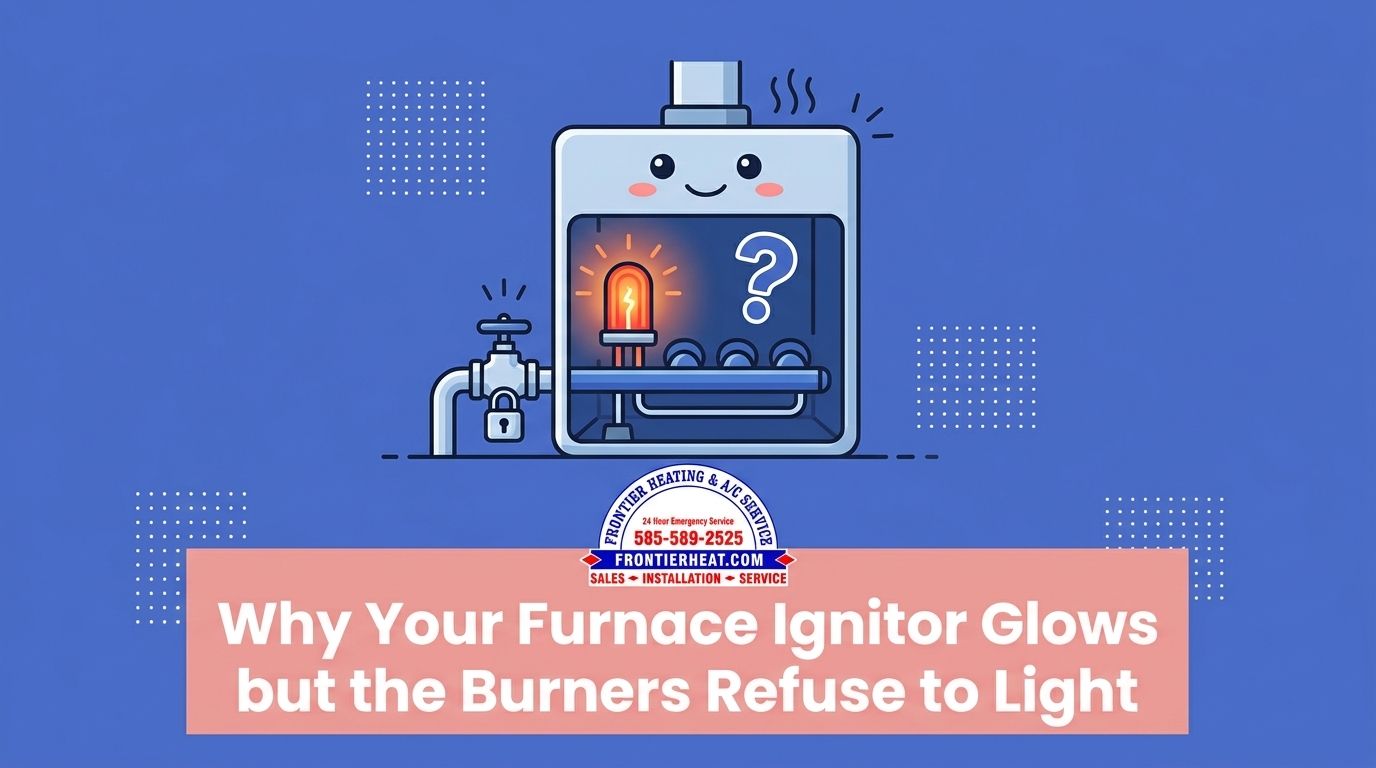
Are you staring at your thermostat, wondering exactly why your furnace ignitor glows but the burners refuse to light? You turn the system on for the first chilly evening of the season. You hear the initial hum of the motor starting up. If you look closely through the small viewport on the front of your unit, you can even see the bright, glowing orange hot surface ignitor lighting up the dark cabinet. Everything seems like it is working perfectly. But then, the expected “whoosh” of gas igniting never happens. The bright orange glow slowly fades to black, the blower fan eventually shuts down, and your home stays cold.
The quick answer: When a furnace ignitor glows but the burners do not light, the system’s sequence of operations has deliberately halted for your safety. Here at Frontier Heating & A/C Service, Inc., our technicians find that the most common culprits include a faulty gas valve that refuses to open, a dirty flame sensor failing to detect combustion, or a tripped high-limit switch preventing the cycle from continuing.
Knowing whether your heating system just needs a simple reset or requires professional intervention is the key to getting your home warm again. Before you start worrying about needing a complete replacement, it helps to understand what your equipment is actually trying to do. Often, this specific symptom means your system’s built-in safety features are working exactly as designed. When you need reliable HVAC services to safely diagnose the problem, bringing in a professional is always the smartest first step.
Understanding Your Furnace’s Built-In Sequence of Operations
Modern heating systems do not just turn on all at once like a simple light switch. Instead, they follow a very strict, highly automated sequence of operations before they ever allow a single drop of combustible gas to flow into your home. This process is a non-negotiable safety checklist. If any single component fails its specific check during this 30-to-60-second window, the main control board deliberately halts the entire process.
Our team typically sees this strict checklist become especially noticeable during your first October heating-startup, when the equipment is waking up after sitting completely dormant for months. Here is exactly what happens during a successful sequence of operations:
- The Call for Heat: Your thermostat detects that the room temperature has dropped below your setpoint and sends a low-voltage electrical signal to the furnace control board.
- The Draft Inducer Starts: Before anything else happens, a small fan called the draft inducer motor turns on. This fan clears out any lingering gases from the combustion chamber and ensures the exhaust flue is clear.
- The Pressure Switch Proves Airflow: A small safety switch verifies that the draft inducer is actually moving air safely out of the exhaust pipe.
- The Ignitor Heats Up: Once airflow is proven, the control board sends power to the hot surface ignitor. This component rapidly heats up to upwards of 2,500 degrees Fahrenheit, creating the bright orange glow you see through the viewport.
- The Gas Valve Opens: Only after the ignitor has had 30 to 60 seconds to reach its maximum temperature does the control board tell the gas valve to open, releasing fuel into the burners.
- The Flame Sensor Confirms Fire: The moment the gas ignites, a specialized metal rod called a flame sensor must immediately detect the presence of a fire. If it does, the blower fan turns on to distribute the heat.
If you see the glow but do not get a fire, your system successfully completed steps one through four, but encountered a hard stop at step five or six. Getting to the bottom of this interruption is a core part of the professional furnace repair and service solutions we provide across Albion.

Common Culprits: Gas Valves and Fuel Delivery Failures
When the sequence of operations halts right after the ignitor reaches its peak temperature, a pattern we see often points to the gas delivery system. The gas valve is an electromechanical gateway. Its only job is to remain tightly closed until the control board sends it a specific electrical voltage, telling it to open and release fuel into the burner assembly.
If the gas valve is faulty, or if the control board relay that sends the signal has burned out, the valve will simply remain shut. The ignitor will glow brightly, waiting for fuel that never arrives. After a few seconds of waiting, the control board realizes the step failed, cuts power to the ignitor, and shuts the system down. You might even hear a faint “click” from the control board trying to open the valve, followed by silence instead of the expected rush of gas.
This “fail-closed” design is incredibly important. Unburned gas pooling inside a combustion chamber is a severe explosion hazard. When the system is in doubt, it defaults to keeping the fuel locked away. Understanding what to do if your heating system won’t turn on means recognizing that this safety feature is protecting your home.
Symptom vs. Culprit Breakdown:
| What You Observe | What It Usually Means |
|---|---|
| Ignitor glows, faint click heard, no gas sound | Faulty gas valve or bad control board relay |
| Ignitor glows, gas “whooshes”, immediately shuts off | Dirty or failing flame sensor |
| Ignitor never glows at all | Burned out ignitor or pressure switch failure |
| System runs briefly, then shuts down completely | Tripped high-limit switch or airflow restriction |
With the rapid October temperature drops we experience here in Albion NY, homeowners should never wait out a no-heat situation. Indoor temperatures can fall dangerously low overnight. If your gas valve is failing to open, it requires immediate, professional diagnostic testing by our technicians using specialized multimeters to determine if the valve itself is dead, or if the control board is failing to send the right signal.
The Impact of Summer Dust on Flame Sensors
Another incredibly common reason for a glowing ignitor with no sustained heat involves a small but mighty component: the flame sensor. During the long, dormant summer months, your heating system sits completely idle. Over time, microscopic layers of airborne dust, pet dander, and household debris settle over the internal components.
When your first October heating-startup rolls around, our maintenance crews frequently find that this dust becomes a major problem. The flame sensor is a thin metal rod that sits directly in the path of the burner flames. When the gas valve opens and the fuel ignites, the flame creates a tiny electrical current (measured in microamps) that travels through the sensor rod back to the control board. This current is the system’s only way of knowing that a safe, controlled fire is actually burning.
If that sensor rod is coated in a thin layer of baked-on summer dust, the dust acts as an electrical insulator. The gas valve might open, the fuel might ignite for one or two seconds, but the dirty sensor cannot feel the flame. The control board immediately assumes the gas failed to light and slams the gas valve shut to prevent raw fuel from flooding your basement or utility closet.
Signs your flame sensor is the issue:
- The short cycle: You actually hear the gas ignite, but the flames die out completely within three to five seconds.
- Repeated attempts: The system tries this short-cycle process two or three times in a row before giving up completely.
- Visual buildup: If you look at the metal rod near the burners, it appears blackened, sooty, or covered in a white, ashy residue.
Because this happens so fast, many homeowners only see the ignitor glow and assume the burners never lit at all. In our daily service calls, this is one of the most frequent common furnace failures before the first freeze, and while it is a relatively straightforward fix for a trained technician, it completely paralyzes your heating system until it is resolved.
Safety Lockouts and Tripped High-Limit Switches
When your heating equipment repeatedly tries and fails to light its burners, it eventually stops trying altogether. This state is known as a “safety lockout.” The main control board operates on a strict “three strikes” rule. If the ignitor glows and the gas fails to light (or fails to be detected by the flame sensor) three consecutive times, the system completely shuts down.
A safety lockout is a hard stop. The blower fan might run continuously to clear out any residual gas, but the unit will not attempt to heat your home again until the lockout is cleared. This is a critical safety intervention to prevent unburned gas from pooling in the combustion chamber, which could lead to a delayed ignition explosion the next time the ignitor heats up.
Another safety mechanism that our experts frequently find interrupting the ignition sequence is the high-limit switch. This switch monitors the internal temperature of the heat exchanger. If the system gets dangerously hot, the high-limit switch trips and cuts the ignition sequence short.
Common causes of a tripped high-limit switch include:
- Clogged air filters: A severely dirty filter chokes off the incoming air supply, causing the heat exchanger to rapidly overheat.
- Blocked return vents: Furniture or rugs covering your return air grilles restrict the airflow the system needs to keep itself cool.
- Closed supply registers: Closing too many vents in unused rooms increases static pressure and traps heat inside the equipment.
- Dirty blower wheels: If the blower fan blades are caked in dust, they cannot move enough air over the heat exchanger to dissipate the heat.
While a tripped high-limit switch usually happens after the burners have been running for a few minutes, a switch that is stuck in the “open” position due to repeated overheating will prevent the sequence of operations from even reaching the gas valve stage. The ignitor may glow, but the system will abort the process to protect itself from heat damage.
Why Gas Furnace Troubleshooting Requires a Professional
When you are shivering in a cold house, it is incredibly tempting to look up DIY tutorials online. However, when it comes to gas valves, flame sensors, and ignition sequences, drawing a firm boundary against DIY repairs is essential for your family’s safety.
Testing a gas valve requires a professional-grade multimeter and a deep understanding of low-voltage electrical circuits. Attempting to bypass a safety switch or force a gas valve open is incredibly dangerous. A mistake here does not just mean a broken heater; it introduces the severe risks of raw gas leaks, sudden fires, or silent carbon monoxide exposure.
Even cleaning a flame sensor, which sounds simple, carries risks. The sensor rod is delicate. Using the wrong abrasive material (like heavy sandpaper) creates deep scratches in the metal where future carbon and dust will build up even faster, guaranteeing another breakdown in a matter of weeks. Furthermore, if you accidentally crack the porcelain insulator at the base of the sensor, the electrical current will ground out, and the system will never run.
At Frontier Heating & A/C Service, Inc., our safety-first approach means we never compromise on proper diagnostic procedures. Our professional expertise ensures that trained technicians accurately diagnose sequence-of-operation failures without ever putting your Albion home at risk. We know exactly how to test these components safely, ensuring your built-in safety mechanisms remain intact and fully functional. Investing in professional diagnostics is one of the greatest benefits of regular furnace service, giving you peace of mind that your equipment is operating exactly as the manufacturer intended.
Frequently Asked Questions About Furnace Ignition Failures
Why does my furnace ignitor glow but go out?
If the gas valve fails to open or the flame sensor doesn’t detect a flame, the control board cuts power to the ignitor for safety. The system is programmed to abort the heating cycle if fuel delivery or combustion confirmation fails. This prevents raw, unburned gas from accumulating inside your home.
What stops a furnace from lighting after the ignitor glows?
A faulty gas valve, a dirty flame sensor, a tripped limit switch, or a malfunctioning control board can halt the sequence. Because modern heating systems follow a strict sequence of operations, any component failing its specific safety check will immediately stop the burners from igniting. Professional diagnostics are required to pinpoint which specific part is failing.
How do I know if my furnace gas valve is bad?
You may hear a click from the control board but no corresponding “whoosh” of gas, requiring a professional multimeter test to confirm. Because the gas valve relies on specific electrical voltages to open, a technician must measure the current to determine if the valve itself has failed mechanically, or if the control board is failing to send the signal.
Will a bad flame sensor stop the burners from lighting?
Yes, if the sensor is coated in dust or failing, it won’t detect the flame, causing the system to shut the gas off immediately. The burners may actually light for two to four seconds before shutting down, which often looks to the homeowner like the burners never lit at all. Regular maintenance prevents this common buildup.
How long should a furnace ignitor glow before lighting?
An ignitor typically glows for 30 to 60 seconds to reach the necessary temperature before the gas valve opens. It must reach upwards of 2,500 degrees Fahrenheit to ensure the gas ignites instantly upon release. If it glows longer than a minute without the gas valve opening, the system is experiencing a sequence interruption.
Can I bypass a furnace safety lockout?
We always advise our customers that a safety lockout should never be bypassed; it indicates a serious failure that requires professional diagnosis to prevent gas buildup. Resetting the system repeatedly without fixing the underlying issue can lead to severe safety hazards, including delayed ignition explosions or carbon monoxide leaks. Always call a licensed technician to resolve a lockout safely.
Restore Your Heat Safely With Professional Diagnosis
Seeing your ignitor glow with no resulting heat can be frustrating, but it is ultimately a sign that your system’s safety mechanisms are doing their job. Whether the issue lies with a stubborn gas valve, a dust-coated flame sensor, or a tripped limit switch, these safety stops exist to protect your home from dangerous gas accumulation.
With the harsh winter weather of Albion NY just around the corner, you cannot afford to wait out an unreliable heating system. Act quickly during this mid-fall season to get these sequence-of-operation failures resolved. Schedule a professional inspection with our team at Frontier Heating & A/C Service, Inc. today to safely diagnose the ignition failure, restore your heat, and ensure your home stays warm and secure all winter long.


