


The Frustration of the Ghost Outage: Waking Up Cold to a Working Furnace
You wake up freezing in the middle of the night to a dead heating system, leaving you to wonder exactly how our techs diagnose intermittent furnace lockouts that reset themselves once morning arrives and the unit is magically running again. That strange silence from your vents at 3:00 a.m. is incredibly stressful. You check the thermostat, bump up the temperature, and wait, but nothing happens. Yet, by the time you are pouring your first cup of coffee, the furnace kicks on as if nothing ever went wrong. This is what the HVAC industry calls a “ghost outage,” and it causes immense anxiety for homeowners who do not know if they can trust their equipment to make it through the next night.
When you need help getting to the bottom of these hidden issues, our team at Frontier Heating & A/C Service, Inc. relies on years of local experience. Our comprehensive HVAC services and dedicated furnace repair and service solutions ensure your home stays warm safely.
The temptation to simply ignore the problem is strong. After all, the heat is currently blowing, and calling a professional might feel premature. However, a furnace that repeatedly shuts itself down in the middle of the night is waving a massive red flag. During a typical mid-fall heating startup in October, these self-correcting pauses are usually the first warning signs of a physical malfunction. Professional technicians do not rely on guesswork or wait for the system to break down completely; we use proven diagnostic methods to uncover the invisible problems hiding inside your equipment.
Understanding the Mechanics of a Soft Lockout
To understand why your furnace appears to fix itself, you have to understand what a lockout actually is. A furnace lockout is not a glitch or a random error; it is an intentional, built-in safety mechanism. Your heating system is designed to shut down entirely to prevent catastrophic failures, dangerous gas leaks, or potential electrical fires. When the system detects that something is operating outside of safe parameters, it cuts the power to the burners and the blower motor.
The Built-In Safety Delay
Most modern furnaces operate with a specific set of safety rules programmed into the control board. The board constantly monitors the ignition sequence, the presence of a flame, and the internal temperature of the heat exchanger. If the furnace fails to light after three to five consecutive attempts, or if it overheats rapidly, the control board triggers a soft lockout.
During a soft lockout, the system forces a mandatory safety delay. This delay usually lasts anywhere from one to three hours. The purpose of this pause is to allow unburned gas to safely vent out of the system or to give an overheating heat exchanger time to cool down. Once the timer expires, the control board automatically resets itself and tries to run the heating cycle again. This is exactly why a furnace that fails at 2:00 a.m. will often be running perfectly by 6:00 a.m. The good news for technicians is that even after this reset, the historical fault codes stored in the control board memory remain intact for us to read.
When Soft Lockouts Become Hard Lockouts
A soft lockout is a temporary warning, but it is not infinite. If the furnace continues to encounter the same safety violation over and over again, the control board will eventually escalate the situation to protect your home.
| Lockout Type | Trigger Condition | Duration | Resolution Required |
|---|---|---|---|
| Soft Lockout | 3-5 failed ignitions or an overheating event | 1 to 3 hours | Automatic reset by the control board timer |
| Hard Lockout | Repeated soft lockouts or severe safety faults | Indefinite | Manual reset by a professional after repairs |
Once a hard lockout occurs, the system stops trying to reset automatically. The furnace will remain completely dead until a technician physically intervenes, diagnoses the root cause, and manually clears the safety fault.

Leading Culprits Behind Intermittent Ignition Failures
When a furnace goes into a soft lockout, it is responding to a physical problem. These physical problems do not fix themselves, even if the digital timer resets. During a typical mid-fall heating startup in October, our Frontier Heating & A/C Service, Inc. technicians see several common environmental and mechanical triggers out in the field that cause these temporary shutdowns.
Flame Sensor Contamination
The Problem: The furnace ignites successfully, runs for a few seconds, and then suddenly shuts off.
The Cause: Over the summer months, microscopic dust, dirt, and humidity settle inside the furnace cabinet. This creates an insulating layer of grime on the flame sensor. The flame sensor is a delicate metal rod that sits directly in the path of the burner flame. Its only job is to detect the presence of fire by sending a tiny electrical current (measured in microamps) through the flame itself. If the sensor is coated in dust, it cannot feel the flame. The control board assumes the gas is pouring into the chamber without igniting, so it shuts the gas valve immediately to prevent an explosion.
The Solution: A technician must carefully remove and clean the flame sensor using specialized abrasive materials that remove the carbon buildup without scratching the sensitive metal.
Overheating and the High-Limit Switch
The Problem: The furnace runs for ten or fifteen minutes, blows warm air, but then shuts down before the house reaches the temperature set on the thermostat.
The Cause: This is almost always an airflow restriction. When air filters are clogged with pet hair, dust, or debris, the blower motor cannot push enough cool air over the heat exchanger. The heat exchanger traps all that thermal energy and rapidly overheats. A safety device called the high-limit switch detects this dangerous temperature spike and immediately kills the burners.
The Solution: Restoring proper airflow by replacing filters, opening closed vents, and ensuring the blower motor is operating at the correct speed prevents the heat exchanger from reaching critical temperatures.
Other culprits include fluctuating gas pressure from a failing gas valve or partial blockages in the exhaust venting system, such as a bird’s nest built over the summer. All of these require physical intervention to permanently resolve.
Why Mild Autumn Mornings Mask Serious Furnace Issues
The regional climate plays a massive role in how these intermittent lockouts present themselves. In our years of servicing homes across Albion NY, the team at Frontier Heating & A/C Service, Inc. knows that October weather is notoriously unpredictable. We frequently experience large temperature swings, with nights dropping near freezing while the daytime temperatures remain relatively mild. This specific weather pattern is exactly why soft lockouts go unnoticed for so long.
When the temperature drops at 2:00 a.m., your furnace is forced to run heavily to keep the house warm. If the system is suffering from poor airflow, that heavy, continuous runtime causes it to overheat and trip the high-limit switch. The furnace enters a soft lockout and shuts down. However, as the sun comes up and the mild autumn morning arrives, the house naturally warms up. The furnace gets a long daytime rest period. This rest period gives the heat exchanger plenty of time to cool off and the control board plenty of time to reset.
This cycle creates a dangerous false sense of security. You might notice the house was a little chilly when you woke up, but because the furnace kicks on fine at 8:00 a.m., you assume everything is perfectly normal. In reality, the underlying issue is steadily worsening. Continuing to run an overheating furnace stresses the metal heat exchanger, which can eventually crack and leak carbon monoxide into your home.
We frequently see this pattern at Frontier Heating & A/C Service, Inc. For example, one local homeowner reached out to our team when their heating system failed to start up for winter, leaving them without heat. Our technicians arrived promptly, offered space heaters to keep the house warm, and diagnosed the critical failure so a new system could be ordered and installed before the deep freeze. Catching these warning signs early is the best way to avoid similar emergencies. Understanding the common furnace failures we see in Albion before the first freeze can help you stay ahead of total system breakdowns.
Reading the Invisible: How We Retrieve Control Board Memory
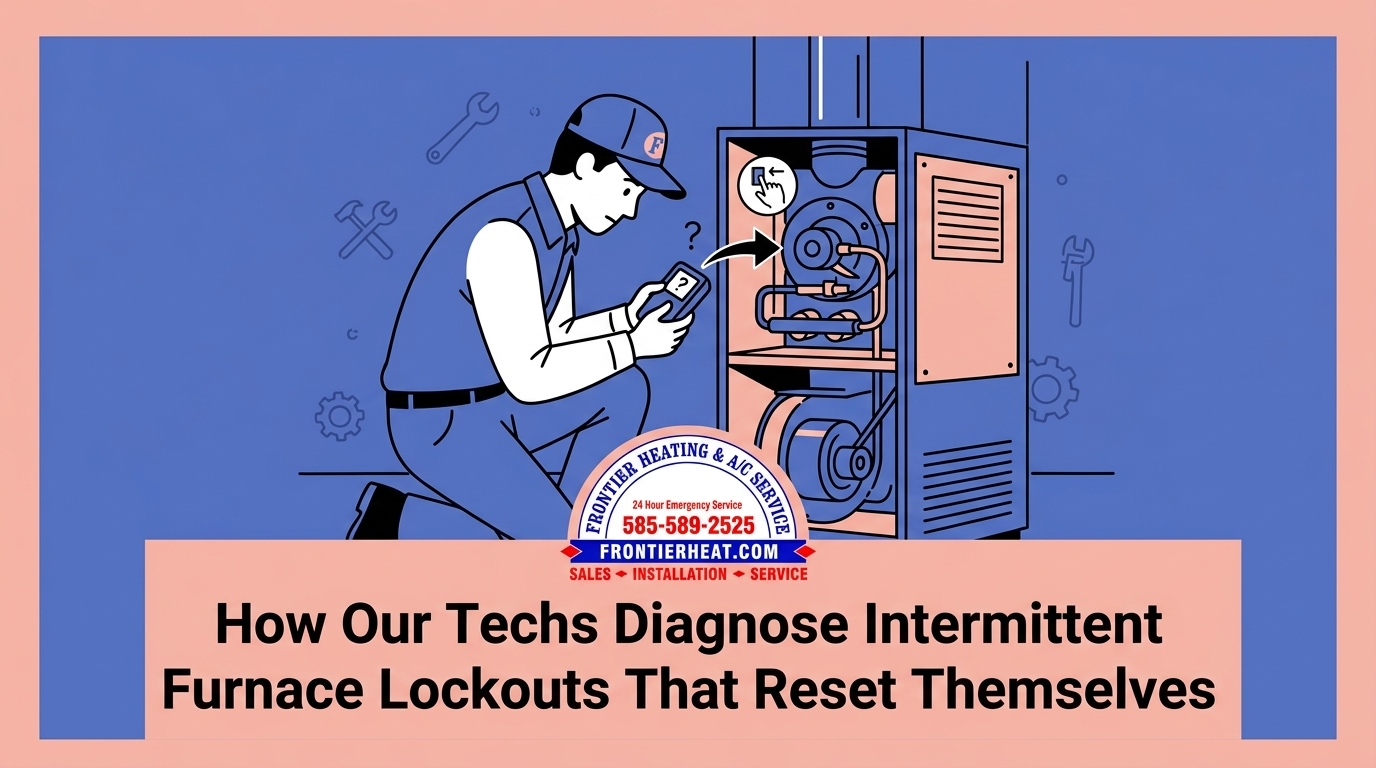
Because the furnace is often running perfectly by the time our Frontier Heating vans pull into the driveway, homeowners frequently wonder how we figure out what went wrong the night before. Our technicians’ expert diagnostic capabilities mean we rely on retrieving historical fault codes stored in the control board memory to find the exact root cause, rather than blindly guessing or swapping parts just because the system is currently running.
Accessing the Diagnostic History
Modern furnace control boards are essentially small computers. When a safety violation occurs—like a flame sensor failure or an overheating limit switch trip—the board logs that specific event in its memory. Even after the soft lockout timer expires and the furnace resets itself for normal operation, that historical code remains saved.
Technicians access this memory by carefully observing a sequence of LED flashes on the control board or by reading a digital display mounted inside the lower cabinet. For example, three short flashes followed by two long flashes might specifically indicate an ignition failure from the previous night.
The quick fix you must avoid: Never turn off the breaker or the master power switch to your furnace before the technician arrives. Cutting the power to the unit will often wipe the control board’s memory clean, erasing the very fault codes we need to diagnose the intermittent problem accurately.
Translating Codes into Actionable Repairs
A fault code provides a roadmap, but it is not a magic answer. If the board flashes a code for “high-limit trip,” it tells the technician that the system overheated, but it does not tell them why it overheated. It could be a dirty filter, a failing blower motor, or blocked ductwork.
Please note that opening the blower compartment, bypassing safety door switches, and interpreting high-voltage control boards is strictly licensed professional work. The internal components carry dangerous electrical currents, and attempting a DIY diagnosis can result in severe shock or permanent damage to the expensive control board.
Beyond the Codes: Our Comprehensive Diagnostic Methodology
Reading the fault code is only the first step. To ensure your system is truly ready for the harsh winter ahead, our technicians perform a complete physical inspection based on the evidence the control board provides. A code indicates a symptom, but hands-on testing finds the cure.
During a typical mid-fall heating startup in October, our comprehensive diagnostic process involves several critical steps:
- Electrical Component Testing: We use specialized multimeters to test the exact microamp draw of the flame sensor. Even if the sensor looks clean to the naked eye, a multimeter will reveal if it is failing to send the proper electrical signal through the burner flame.
- Gas Pressure Verification: Using a digital manometer, we test the incoming and outgoing pressure at the gas valve. If the pressure fluctuates wildly during ignition, the furnace will drop the flame and trigger a lockout. We ensure the pressure matches the manufacturer’s exact specifications.
- Airflow and Temperature Rise Checks: We measure the temperature of the air entering the return duct and compare it to the air leaving the supply vents. If the temperature rise is too high, we know the system is trapping heat and will eventually trip the limit switch again.
- Venting System Inspections: We visually inspect the PVC exhaust pipes or metal flues for early-season obstructions, ensuring that dangerous combustion gases have a clear path out of your home.
This thorough approach guarantees that we fix the actual root cause of the ghost outage. By utilizing our expert HVAC repair services, you can trust that your furnace will not leave you shivering at 3:00 a.m. ever again.
Frequently Asked Questions About Intermittent Furnace Lockouts
Will a furnace lockout reset itself automatically?
Yes, a soft lockout will usually reset itself. Most modern furnaces enforce a mandatory safety delay of one to three hours after a fault. Once this timer expires, the control board will automatically attempt to ignite the burners and run a normal heating cycle again.
Why does my furnace keep going into lockout mode at night?
Nighttime lockouts are typically caused by long, heavy run cycles. When temperatures drop significantly overnight, the furnace has to run longer to maintain the thermostat setting. This extended operation exposes airflow restrictions, causing the system to overheat and shut down until the morning.
How do HVAC techs read furnace codes if the system is running?
Technicians rely on the historical fault codes stored in the control board memory. Even if the furnace has reset and is currently operating normally, the internal computer saves a record of the recent safety faults, which we read via LED flash sequences on the board.
What is the difference between a soft lockout and a hard lockout?
A soft lockout is a temporary safety pause that resets automatically after a few hours. A hard lockout occurs when the system experiences repeated failures or severe safety risks; it shuts the furnace down completely and requires a manual reset by a licensed professional.
Can a dirty air filter cause my furnace to shut down and restart?
Absolutely. A dirty air filter severely restricts the amount of cool air flowing over the internal heat exchanger. The trapped thermal energy causes the furnace to overheat rapidly, tripping the high-limit safety switch and forcing a soft lockout until the system cools off.
Is it safe to keep resetting my furnace manually?
No, repeatedly resetting a furnace manually is dangerous. The lockout is a safety mechanism designed to protect your home from gas leaks, fires, or cracked heat exchangers. Forcing the system to run while ignoring the underlying fault can lead to catastrophic equipment failure.
Secure Your Comfort Before the Winter Freeze Hits
A furnace that resets itself in the middle of the night is not fixing itself; it is begging for help. Those temporary ghost outages are early warning signs of airflow restrictions, dirty sensors, or ignition failures that will eventually turn into a permanent breakdown. Living in Albion NY means we know how quickly mild autumn days turn into freezing winter nights. Do not wait for a hard lockout to leave your family in the cold. Schedule a professional diagnostic visit today so our technicians can pull those hidden fault codes and secure your comfort for the long winter ahead.


