


Why Your Recently Weatherized Home Might Be Suffocating Your Furnace
Your newly upgraded insulation is doing a fantastic job keeping the chill out, but understanding the role of combustion air intake in tightly sealed Western New York homes becomes critical when that strange noise from your utility room isn’t going away on its own. As we enter the mid-fall heating-startup season, our team at Frontier Heating & A/C Service, Inc. regularly fields calls from homeowners who discover that their summer weatherization projects have accidentally created a suffocating environment for their heating systems. You upgrade your weatherstripping, seal your attic, and install new windows to prepare for freezing temperatures, which is excellent for energy efficiency. However, sealing the home envelope eliminates the natural drafts older furnaces rely on to operate safely.
This sudden lack of ambient indoor air often leads to unexpected furnace lockouts right when temperatures begin to drop. A pattern we see often is that the heating system is essentially trying to breathe through a pinched straw, causing safety switches to trip and burners to shut down. Addressing this requires a thorough evaluation of how your heating system breathes within its newly modified environment. If you are dealing with mysterious shut-offs or strange odors near your equipment, scheduling comprehensive furnace repair and service ensures the system is safely adapted to your home’s new, tighter envelope before winter arrives.
The Hidden Mechanics of Furnace Combustion Air Requirements
To understand why weatherization causes heating problems, you have to look at the fundamental building science of how a standard gas furnace operates. A standard atmospheric draft gas furnace requires massive amounts of air to burn fuel safely and efficiently. It does not just use a little bit of air to keep a flame going; it consumes a staggering volume of oxygen to create heat and safely vent the exhaust.
The standard requirement in the HVAC industry is up to 50 cubic feet of combustion air for every single cubic foot of gas burned. This includes the air needed for the actual chemical reaction of burning the gas, plus “dilution air” that mixes with the hot exhaust to safely carry it up the chimney flue. In our years of maintaining HVAC systems across Albion NY and surrounding Western New York communities, we’ve observed that older homes historically provided this air naturally. Drafty historic farmhouses and mid-century homes had enough tiny gaps in windows, doors, and uninsulated walls to constantly replenish the indoor air supply.
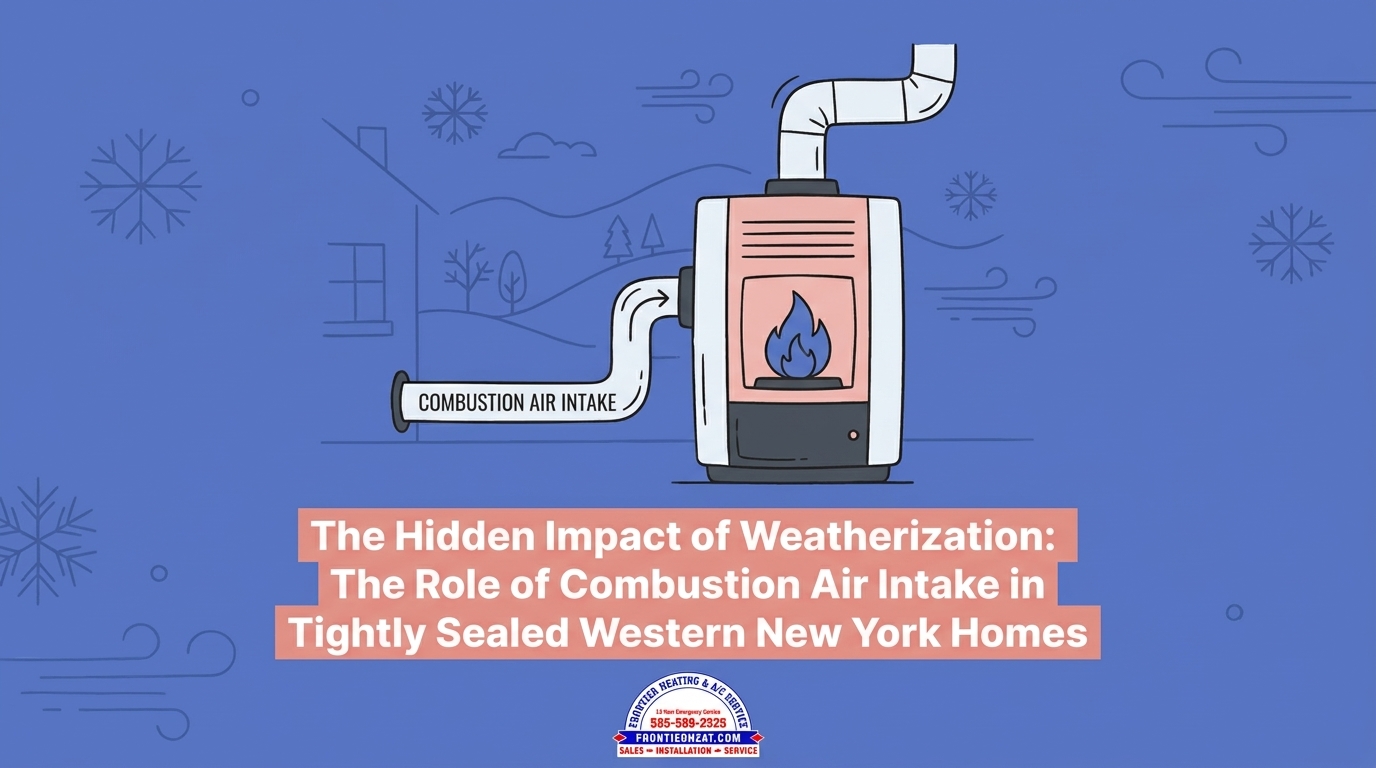
When a home is tightly sealed, the furnace quickly exhausts the available indoor air, leading to a starved combustion process. The system simply runs out of oxygen. By contrast, modern high-efficiency (direct-vent) furnaces pull air directly from the outside via dedicated PVC intake piping, bypassing the indoor air supply entirely. This makes them immune to the tightness of the home’s envelope.
Atmospheric Draft vs. Direct Vent Systems
Understanding what type of system you have is the first step in diagnosing air starvation issues. Upgrading a home’s insulation without upgrading an atmospheric furnace creates a dangerous mismatch in building science.
| System Characteristic | Atmospheric Draft Furnace | Direct Vent (High-Efficiency) Furnace |
|---|---|---|
| Air Source | Pulls ambient indoor air from the basement or utility room. | Pulls fresh outdoor air directly from outside the home. |
| Venting Method | Uses a metal flue pipe relying on thermal buoyancy (hot air rises). | Uses a sealed two-pipe PVC system (one intake, one exhaust). |
| Risk in Sealed Homes | Extremely high risk of air starvation and safety lockouts. | Zero risk of indoor air starvation; operates independently. |
| Visual Indicator | Open metal grates or louvers on the front of the furnace cabinet. | Two solid white plastic (PVC) pipes exiting the unit. |
The Unintended Consequences of Aggressive Home Weatherization
Regional energy efficiency programs heavily encourage spray foam insulation, upgraded double-pane windows, and extensive weatherstripping. These upgrades are heavily promoted because extreme freezing winters drive homeowners to aggressively seal their homes to keep heating bills manageable. However, our technicians frequently discover that these well-intentioned upgrades can restrict a home’s natural air infiltration to dangerously low levels.
Building scientists measure home leakiness in Air Changes per Hour (ACH). An older, drafty home might naturally replace its entire volume of indoor air with outdoor air one to two times every hour (1.0 to 2.0 ACH). Aggressive weatherization can drop this infiltration rate below 0.35 ACH. The transition from a drafty historic farmhouse to a tightly sealed modern envelope effectively traps air inside, creating a sealed environment where fresh oxygen cannot enter fast enough to replace what the furnace consumes.
This trapped air environment makes suffocation risks much more acute than in milder climates. In our local service area, it is a leading cause of common furnace failures before the first freeze. Homeowners must treat insulation and HVAC ventilation as a single, interconnected ecosystem rather than isolated home improvement projects.
How Insulation Upgrades Alter Indoor Air Pressure
Sealing leaks absolutely stops heat loss, but it also stops fresh air intake. The home becomes akin to a sealed plastic bag. When the furnace turns on, it tries to draw the breath it needs from inside that sealed bag. Because no new air is leaking in through the newly spray-foamed rim joists or weatherstripped doors, the furnace begins to pull against a vacuum. This phenomenon is especially common in retrofitted older homes where the original heating system was sized and installed under the assumption that the house would always be drafty.
Understanding Negative Pressure and Furnace Suffocation
To fully grasp why a furnace shuts down in a sealed home, you have to look at the physics of negative pressure. Negative pressure occurs when exhaust fans, dryers, and the furnace itself push more air out of the home than can naturally leak back in. When testing for negative pressure during a mid-fall heating-startup, our team often finds a combination of factors: you might have a bathroom exhaust fan running (pulling 50 cubic feet per minute), a clothes dryer running (pulling 150 CFM), and a kitchen range hood running (pulling up to 400 CFM).
All of these appliances are expelling air out of the house. Because the home is tightly sealed, makeup air cannot enter to replace the expelled air. The house goes into a state of negative pressure. When the furnace kicks on and tries to draft its exhaust up the chimney, it struggles against this powerful vacuum. The resulting incomplete combustion leads to frequent safety lockouts, leaving you without heat. Resolving this pressure imbalance requires expert ventilation solutions to introduce controlled makeup air back into the utility space.
Symptoms of a Furnace Starving for Air
If your heating system is struggling against negative pressure, it will give you several warning signs before a total shutdown occurs. Our team recommends looking for these specific indicators during your mid-fall heating-startup:
- System short-cycling: The furnace turns on, runs for just a minute or two, and then abruptly shuts off before the house reaches the target temperature. This is often a safety switch tripping due to high heat buildup from poor airflow.
- Repeated ignition failures: You hear the system click and try to light, but the burners fail to catch. A pilot light (on much older systems) may frequently blow out due to strange drafts in the basement.
- Yellow or wavering burner flames: A healthy gas furnace produces a crisp, steady blue flame. If the flames are lazy, wavering, or distinctly yellow and orange, the system is not getting enough oxygen for complete combustion.
- Unusual odors near the unit: A stale, stuffy, or slightly chemical smell in the utility room indicates that combustion gases are not venting properly.
- Excessive window condensation: If the windows in your basement or utility room are suddenly covered in heavy condensation, it is a sign that combustion water vapor is spilling into the room instead of going up the chimney.

Carbon Monoxide Backdrafting: The Danger of Poor Combustion Air
While a furnace that frequently shuts down is frustrating, the real danger of negative pressure is far more serious. When a home experiences severe negative pressure, the vacuum effect searches for any available air inlet to balance the pressure. The physical force of this vacuum is surprisingly strong, and it will pull air from wherever it can.
The path of least resistance is often the furnace’s own exhaust flue or a nearby gas water heater vent. Normally, hot exhaust gases rise up the metal chimney due to thermal buoyancy. However, the negative pressure inside the house can overpower that buoyancy. It can literally reverse the flow of exhaust gases, pulling them down the chimney and spilling them directly into the living space.
This phenomenon, known as backdrafting, introduces deadly carbon monoxide, nitrogen dioxide, and other hazardous combustion byproducts into the home air supply. Because of this life-threatening risk, homeowners must know how to detect dangerous furnace gas leaks and act immediately. Carbon monoxide is entirely invisible and odorless, making it impossible to detect without specialized equipment or functioning alarms.
Recognizing the Warning Signs of Backdrafting
If you suspect your system is suffering from negative pressure during your mid-fall heating-startup, inspect the utility area for these physical signs of backdrafting:
- Melted plastic components: Look at the plastic grommets or rings on top of your water heater or near the furnace draft hood. If they look warped or melted, hot exhaust gases are spilling out into the room.
- Scorching or soot marks: Dark, powdery soot buildup or scorch marks around the burners, the draft hood, or the exterior of the furnace cabinet indicate incomplete combustion and exhaust spillage.
- Frequent carbon monoxide detector alarms: If your CO detectors are chirping or alarming, do not assume they are malfunctioning. Evacuate the home and contact emergency services immediately.
- Stale, chemical odors: A persistent stuffy, damp, or slightly acidic smell in the utility room is often the scent of aldehydes, a byproduct of incomplete combustion that accompanies carbon monoxide.
Evaluating and Updating Your Furnace Ventilation System
Resolving negative pressure and combustion air starvation requires targeted, professional modifications to your home’s ventilation strategy. The most common solution we recommend is adding a dedicated exterior combustion air intake to provide the furnace with its own independent air supply. This involves routing properly sized intake piping from the exterior of the home directly to the utility room or right into a specialized “make-up air” boot near the furnace cabinet.
Because calculating makeup air requirements involves complex building science and strict safety codes, this is never a DIY project. A licensed HVAC professional must evaluate the entire home envelope, tally the BTU output of all existing exhaust appliances, and measure the specific draft pressure of the furnace model. At Frontier Heating & A/C Service, Inc., our specific knowledge of local housing stock allows us to accurately diagnose these issues. In our experience, we understand the vast difference between servicing a drafty 19th-century farmhouse and a modern, tightly sealed retrofit, demonstrating the technical authority required to keep your family safe.
Depending on the severity of the negative pressure in your Albion NY home, our solutions range from installing passive intake dampers (which automatically open to allow fresh air in when the furnace fires) to recommending an upgrade to a fully sealed direct-vent furnace. A direct-vent system solves the problem entirely by utilizing a sealed combustion chamber that never interacts with your indoor air pressure.
Why Professional Assessment is Non-Negotiable
Attempting to cut a hole in your wall or run your own venting pipe is incredibly dangerous. Professional assessment and installation are mandatory for several reasons:
- Sizing requirements: Improperly sized intakes can freeze nearby water pipes in the winter or fail to resolve the negative pressure entirely.
- Specialized diagnostic tools: Professionals use digital manometers and combustion analyzers to measure draft pressure and verify that the system is burning safely under all conditions.
- Code compliance: Local building and safety codes mandate specific clearances, materials, and calculations for combustion air. Non-compliant work can void your homeowner’s insurance and put your life at risk.
Frequently Asked Questions About Combustion Air in Sealed Homes
Why does a tightly sealed home cause furnace backdrafting?
A tightly sealed home causes backdrafting because it traps air inside, creating negative pressure when exhaust appliances run. When bathroom fans or dryers push air out of the house, no fresh air can leak in to replace it. The resulting vacuum is strong enough to pull exhaust gases straight down the furnace chimney and into your living space, rather than letting them vent safely outside.
What are the symptoms of a furnace starving for air?
The most common symptom of a starving furnace is a system that short-cycles, turning on and off rapidly without heating the home. You may also notice yellow, lazy burner flames instead of a crisp blue flame, excessive condensation on windows near the utility room, or a stale, stuffy odor near the equipment. Frequent safety lockouts during cold weather are a major red flag.
Do you need a fresh air intake on a high-efficiency furnace?
Yes, high-efficiency (direct-vent) furnaces inherently require a fresh air intake pipe to function properly. These systems use a sealed combustion process, meaning they rely on a dedicated PVC pipe to pull air from outside, and a second PVC pipe to vent exhaust. This design makes them incredibly safe and entirely immune to the negative pressure problems found in tightly sealed homes.
How do I know if my furnace needs a combustion air intake?
You likely need a combustion air intake if you have an older, atmospheric draft furnace and have recently completed major insulation or weatherization upgrades. If your furnace frequently locks out, if you see soot around the burners, or if you notice melted plastic rings on top of your nearby water heater, a professional must evaluate your home’s makeup air requirements immediately.
Can negative pressure in a house be fixed without replacing the furnace?
Yes, negative pressure can often be resolved without replacing the entire heating system. An HVAC professional from our team can install a dedicated make-up air intake, passive ventilation dampers, or mechanical draft inducers to ensure the utility room receives adequate fresh air. However, if the furnace is nearing the end of its lifespan, we typically recommend upgrading to a direct-vent system as the most permanent and reliable solution.
Ensuring Safe and Reliable Heating for Your Home
Weatherizing your home with new insulation and tighter windows is a smart investment for your comfort and your energy bills, but it requires looking at your HVAC system as part of a whole-home ecosystem. Ensuring your furnace has adequate combustion air prevents unexpected lockouts and protects your family from life-threatening backdrafting hazards.
If you suspect your recent insulation upgrades are starving your heating system, a professional evaluation is the safest next step. Homeowners across Albion NY and surrounding Western New York communities trust our team at Frontier Heating & A/C Service, Inc. to balance energy efficiency with absolute safety. Explore your options for expert furnace repair to keep your home both perfectly sealed and perfectly warm this winter. Understanding the role of combustion air intake in tightly sealed Western New York homes is the key to a worry-free heating season.


