


The Silent Countdown from August Humidity to October Frost
While August in Western New York might still feel like peak summer, the most common furnace failure we see in Albion before the first freeze is already taking root in your basement right now. At Frontier Heating & A/C Service, we talk to countless homeowners who assume that because their heating system is turned off, it is safe from wear and tear. The reality our technicians see every day is that the dormant period between late spring and early fall is one of the most dangerous times for a furnace’s internal components.
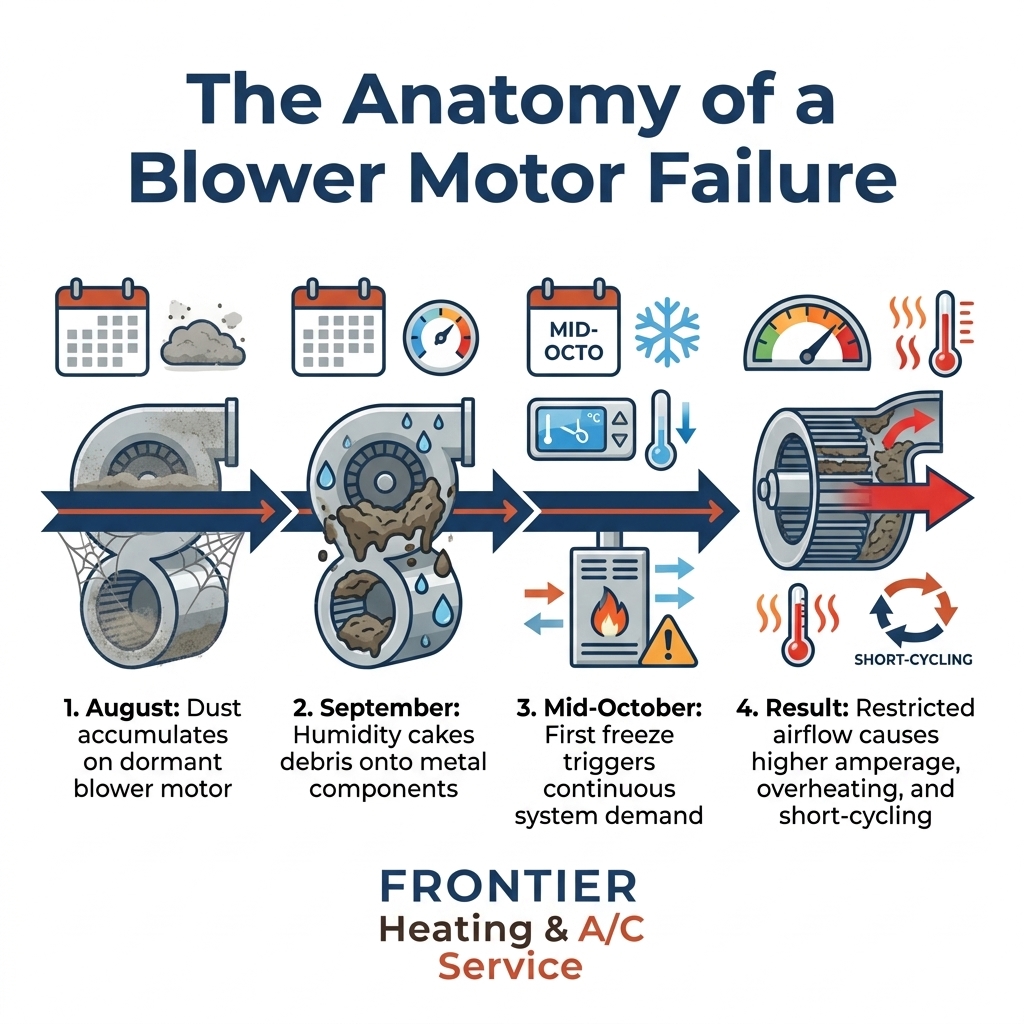
In our years of serving the local community, we’ve found the concrete problem lies in August late-summer dust accumulation. For months, your furnace sits completely idle while the household remains active. Without the constant flow of conditioned air moving through the heating cabinet to keep surfaces dry and clear, particulates begin to settle deep inside the machinery. By the time the weather shifts, homeowners face a critical decision: proactively clear out this hidden buildup while the weather is still warm, or wait until the thermostat drops and risk a catastrophic failure on the coldest night of the year.
Addressing this issue early is the smartest way to protect your home. If you want to get ahead of the seasonal shift, having our team provide professional Albion heating services now can save you from the stress and expense of needing emergency heating repair when the temperatures inevitably plummet.
How Late-Summer Dormancy Creates the Perfect Storm for Dust
To understand why a furnace breaks down in October, you have to look at what happens to it in August. As HVAC professionals, we often explain that a furnace cabinet is essentially a large metal box that acts as a central hub for your home’s ductwork. Even when the heating burners are off, the cabinet remains a collection point for everything circulating in your indoor environment.
During the summer, this dormancy creates a perfect storm for mechanical sabotage. The dust doesn’t just sit lightly on the surface of the metal; environmental factors actively work to bond that debris to the most sensitive moving parts of your heating system. This excessive particulate buildup also points to broader indoor air quality concerns, as the same dust choking your furnace is cycling through your living spaces. Our team frequently recommends upgrading your indoor air quality solutions to significantly reduce the volume of debris that reaches your HVAC equipment in the first place.
The Role of Household Particulates
Every home generates a steady stream of airborne debris. Pet dander, pollen from open windows, dead skin cells, and everyday dirt are constantly pulled into the return ducts. While standard fiberglass filters catch the largest debris, fine particulates easily slip through the porous material.
When the furnace is running regularly during the winter, the sheer force of the blower motor keeps lighter dust moving through the system. But during the summer months of inactivity, gravity takes over. These microscopic particles settle directly onto the blower motor housing, the fan blades, and the electrical components. Month after month, we see this layer grow thicker, acting as an unwanted insulating blanket over parts that desperately need to dissipate heat.
Humidity and Caked-On Debris
The microclimate of Western New York adds a destructive variable that our crews battle constantly: high summer humidity. Humid August air carries moisture directly into your basement and through your ductwork. When this moisture meets the settled dust inside your furnace cabinet, a chemical and physical change occurs.
The loose, dry dust absorbs the moisture and transforms into a sticky, paste-like substance. As the humidity fluctuates and eventually dries out toward early fall, that paste hardens. It cakes onto the mechanical components so tightly that the standard airflow of the furnace turning on will never blow it away. This caked-on debris throws the system entirely out of balance before the first spark of ignition ever occurs.
The Mechanical Chain Reaction: Inside the Blower Motor
The blower motor is the lungs of your heating system. Its primary job is to pull cold air from the house, push it over the hot heat exchanger, and distribute the warmed air back through the supply vents. It relies on a “squirrel cage” fan—a cylindrical wheel lined with dozens of small, cupped blades designed to scoop and throw air efficiently.
When August late-summer dust accumulation coats these cupped blades, they lose their aerodynamic shape. Instead of scooping air, the flattened, heavy blades merely churn it. The motor suddenly has to work significantly harder to move the exact same volume of air. Because cleaning a sensitive blower wheel requires professional calibration tools, specialized chemical solvents, and high-voltage safety protocols, homeowners should never attempt this as a DIY project. We’ve seen first-hand how tampering with the motor assembly without proper training easily leads to permanent balance issues or electrical shock.
Increased Amperage and Overheating
As the dust-choked wheel struggles to spin, the blower motor demands more electricity to keep up the pace. This increased electrical draw is measured in amperage. Every motor is rated for a specific maximum amp draw; when it exceeds that limit, the internal copper windings begin to overheat.
Normally, the cool air passing over the motor helps dissipate its natural operational heat. But because the motor is now wrapped in an insulating layer of caked-on dust, that heat has nowhere to go. The internal temperature of the motor spikes dangerously high, degrading the lubrication in the bearings and slowly melting the protective coating on the electrical wires.
The Danger of Short-Cycling
When a furnace overheats, built-in safety limit switches detect the dangerous temperatures and immediately shut the system down to prevent a fire. This sudden shutdown before the house has reached the target temperature is known as short-cycling.
During a short-cycle, the furnace rapidly turns on, overheats, shuts off, and then tries to start again once it cools down slightly. This constant starting and stopping puts immense strain on every single component in the cabinet, from the igniter to the heat exchanger. Left unchecked, short-cycling accelerates wear and tear exponentially, turning a simple dirty motor into a full-system breakdown.
| Operational Metric | Clean Blower Motor | Dust-Choked Blower Motor |
|---|---|---|
| Airflow Efficiency | Maximum volume, blades scoop air cleanly | Severely restricted, blades churn air inefficiently |
| Amperage Draw | Normal, within manufacturer specifications | Spikes dangerously high as motor strains |
| Motor Temperature | Cooled naturally by passing return air | Overheats due to insulating dust and friction |
| System Behavior | Runs full, steady heating cycles | Triggers limit switches, causes short-cycling |
The ‘First Cold Day’ Phenomenon in Western New York
The transition into fall is rarely a gentle slope in our region. As locals know, the October first freeze in Albion often arrives abruptly, plunging temperatures below freezing overnight. This sudden shift is exactly what triggers the mechanical trap set during the summer.
When homeowners turn their heat on for a quick, ten-minute test run in September, a compromised blower motor might manage to survive the short cycle. But when the first real freeze hits in mid-to-late October, the thermostat demands hours of continuous, uninterrupted heating to keep the house warm. That sustained demand is the breaking point.
Sudden System Strain
A motor running on borrowed time cannot handle a four-hour heating cycle. The continuous operation pushes the already overheating, dust-choked components past their thermal limits. The bearings seize, the windings burn out, and the blower motor fails completely.
This creates a massive cascade effect. Without the blower motor moving air, the heat exchanger rapidly overheats, shutting the entire furnace down. The house goes completely cold just as the outdoor temperatures are dropping to their lowest point of the season. At Frontier Heating & A/C Service, this specific mechanical failure accounts for a massive, predictable surge in urgent service calls we receive the morning after the first major temperature drop.
Early Warning Signs of Blower Motor Strain
Fortunately, a blower motor rarely fails without warning. Before the October first freeze pushes the system over the edge, the furnace will exhibit several clear indicators of mechanical strain. By paying attention to these non-DIY symptoms that our technicians always check for, you can catch the problem before it leaves you without heat.
Focus on auditory and sensory clues. You do not need to open the furnace cabinet or inspect internal parts to know your motor is struggling. Simply observing how the system behaves during its first few cycles of the season is usually enough to identify an airflow restriction.
Auditory Clues: Screeches and Hums
- High-pitched squealing: A loud screech when the fan starts usually indicates that the motor bearings have lost their lubrication, often exacerbated by a thick layer of gritty dust.
- Loud electrical humming: If you hear a deep, vibrating hum coming from the furnace before the fan actually starts spinning, it points to a struggling motor or a failing run capacitor trying to force a heavy, dirty wheel to turn.
- Grinding or scraping noises: This suggests the blower wheel has become so unbalanced by uneven dirt buildup that it is physically rubbing against the metal housing.
Sensory Clues: Weak Airflow and Odors
- Weak vent pressure: Hold your hand over the supply vent farthest from the furnace. If the air is barely trickling out, the blower wheel cannot overcome the static pressure of the ductwork due to caked-on debris.
- Electrical burning smells: While a brief smell of burning dust is normal on the very first startup, an acrid, electrical burning odor that persists means the motor is drawing too much amperage and the wire coatings are melting.
- Unusually hot cabinet exterior: If the metal exterior of the furnace cabinet is uncomfortably hot to the touch, the internal heat is not being properly exhausted into the ductwork.
Real-World Furnace Diagnostics in the Village of Albion
When dealing with regional climate challenges, generic advice often falls short. Our team at Frontier Heating & A/C Service relies on years of first-hand experience diagnosing Albion’s specific seasonal wear-and-tear. We know exactly how the humid summers and sudden freezing autumns impact local equipment, because we see the same mechanical patterns play out on our service routes year after year.
Prompt, knowledgeable intervention is the only way to save a system before it completely burns out. Recently, an Albion, NY homeowner reached out to us when they urgently needed to get their furnace and AC back up and running after noticing severe performance drops. Our service technicians arrived on time, brought their local expertise to the diagnosis, and identified the airflow restrictions immediately. Because our team is polite, knowledgeable, and courteous, we were able to get the system back online quickly, restoring full functionality before the weather turned hostile.
This boots-on-the-ground experience highlights a distinct advantage. A national HVAC hotline might tell you to just change your filter, but our local technicians know that August humidity in Western New York means checking the blower motor’s amp draw is absolutely critical before clearing a furnace for winter duty.
Breaking the Cycle: Proactive Maintenance Over Emergency Repairs
The decision point for homeowners is straightforward: you can either schedule a controlled, proactive intervention in late summer, or you can wait for the system to make the decision for you during an October freeze. August is the strategic window for professional furnace maintenance because the equipment is idle, schedules are open, and the damage from summer dust has not yet compounded into a mechanical failure.
A professional tune-up directly addresses the root causes of blower motor strain. By utilizing our preventative HVAC maintenance plan, you automate this seasonal preparation, ensuring that your system is thoroughly cleaned and calibrated long before the cold weather arrives.
The Value of a Comprehensive Tune-Up
During a late-summer inspection, professionals safely pull the entire blower assembly out of the cabinet. They chemically clean the caked-on debris from the squirrel cage wheel, restoring its aerodynamic efficiency. They also use a multimeter to check the exact amperage draw of the motor, ensuring it is operating safely within manufacturer specifications.
This early intervention prevents the domino effect of component failure. A clean motor runs cooler, draws less electricity, and moves more air. For a complete look at everything a professional evaluates during this critical window, reviewing our Fall Furnace Tune-Up Checklist can help you understand the full scope of the seasonal preparation we provide.
Secure Your Home’s Comfort Before the Cold Hits
Taking a logical, proactive approach in late summer is the absolute best way to prevent October emergencies in Albion, NY. The transition from humid days to freezing nights happens fast, and your heating system needs to be mechanically ready to handle the sudden, continuous demand.
Keep a close watch for the early warning signs of blower motor strain, such as weak airflow or unusual humming noises. If you suspect your system is choked with summer dust, do not wait for the first freeze to test its limits. Schedule a professional inspection and tune-up with our local experts at Frontier Heating & A/C Service today to ensure your furnace runs safely and efficiently all winter long.
Frequently Asked Questions
Why is my furnace short cycling on the first cold day?
Short-cycling often happens because the furnace is overheating and triggering its internal safety limit switches. Over the summer, dust accumulates on the blower motor, restricting airflow and trapping heat inside the cabinet. When the system runs for a long period on the first cold day, it quickly overheats and shuts down to prevent a fire.
What happens when a furnace blower motor gets dirty?
A dirty blower motor loses its ability to scoop and move air efficiently. The added weight and disrupted aerodynamics force the motor to work harder, causing it to draw higher electrical amperage. This excess strain leads to severe overheating, melted wire coatings, and eventually, complete motor failure.
What is the most common reason for a furnace to stop working in early fall?
The most common early-season failure is a burnt-out blower motor caused by summer dust accumulation. Dormant debris mixes with high summer humidity to form a caked-on layer over the moving parts. When the system is suddenly pushed to run continuously in the fall, the strained motor overheats and dies.
Can I clean my furnace blower motor myself?
No, cleaning a furnace blower motor requires professional tools, specific chemical solvents, and high-voltage safety knowledge. The blower wheel must be perfectly balanced; attempting to clean it without proper training can easily throw it out of alignment, causing severe vibrations and permanent mechanical damage.
How often should a furnace be serviced in Western New York?
A furnace in Western New York should be professionally serviced at least once a year, ideally in late summer or early fall. Because the region experiences high summer humidity and harsh, sudden winter freezes, this annual tune-up is critical for clearing out dormant dust and verifying electrical safety before heavy usage begins.


